While I have more or less mastered at least how to read Korean characters in the past, I have never tried learning Hiragana or Katakana before.
In Chinese, there are two sets of characters — single, root characters and compound characters made up of two or more individual characters. In Korean, each character represents a letter or sound. Japanese seems to be somewhere in the middle of those two; each character represents a single sound or syllable, such as ‘a’ or ‘ka.’
Having previously been beset by China’s ‘cu’ sound (as in the surname ‘Cui’) and Korea’s tendency for letters to simultaneously change sounds based on position and not quite sound like anything we have in English, not to mention Arabic’s “ghayn غ” which gave me fits in college. . . . Japanese at least sounds relatively easy to pronounce. It has nice, familiar sounds like ‘ga’ and ‘kyo’ which may not be common in English but at least feel comfortable in the mouth. Then again, I may just be overestimating myself 😂
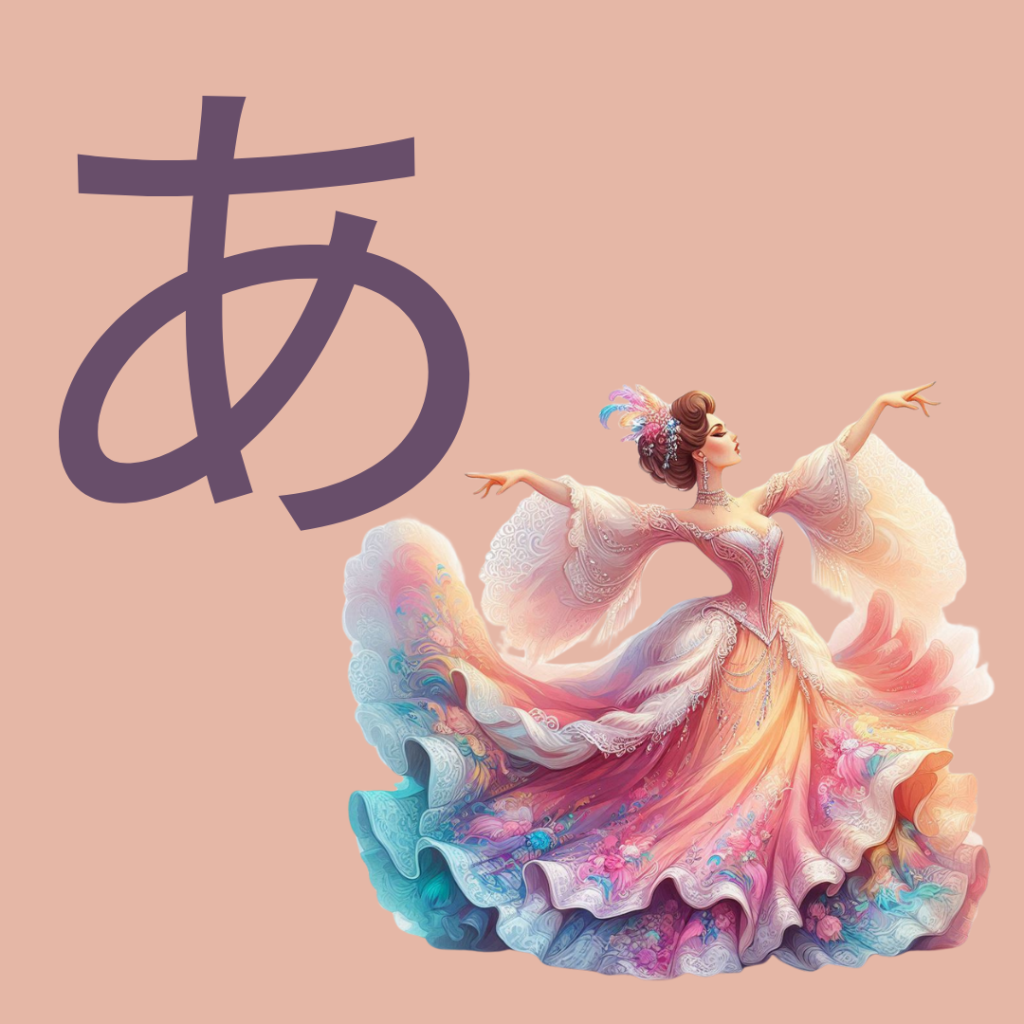
Hiragana
The Hiragana character あ (a) has a fascinating history, tracing its roots back to the Kanji character 安, which was borrowed from its original Chinese counterpart,
In Chinese, the character 安 is pronounced “ān” and conveys a sense of safety, calmness, and peace. It’s a compound character, blending the radical for “roof” (宀) with the character for “woman” (女)—symbolizing security and tranquility. For example, “安静” (ān jìng) means “quiet” and appears in the phrase 请安静 (qǐng ān jìng) or ‘Please be quiet’.
When the Japanese adopted this Kanji, they retained a similar meaning but gave it two distinct pronunciations depending on its use.
The Chinese-derived reading (on’yomi) reads the character as an ‘an‘ sound and appears in compound words with other Kanji (The whole word / phrase is in Chinese characters). It still conveys the concept of ‘peace’ or ‘safety’. An example would include “安静” (ansei) refers to quiet or resting as in 安静にしてください (Ansei ni shite kudasai) which means “Please rest quietly.”
The Japanese-derived reading (kun’yomi) reads the character as “yasu” and appears when the character stands alone or when it is part of what is otherwise a word in Japanese characters. Again it retains the connotation of ‘peace’ or ‘calm’.
Typically used as a noun, “yasu” becomes “yasui” (安い ) if used as an adjective and refers to something “cheap” or “inexpensive”. This “cheap” connotation might originate from the notion of something being straightforward or effortless, loosely connecting to a sense of simplicity or where obtaining the item lacks stress.
Names: In proper nouns, it can vary—e.g., 安倍 (Abe) uses “a” (shortened “an”), while a name like 安田 (Yasuda) uses “yasu,” depending on tradition or family preference. So ask when you meet them ❓
Finally, in its simplified Hiragana form, あ (a), it becomes a basic building block of the Japanese language. Pronounced like the “a” in “father,” it’s a soft, open sound that’s essential to Japanese phonetics.

Katakana
The Katakana character ア represents the “a” sound in Japanese, pronounced much like the “a” in “father,” despite its unique look compared to the Hiragana kana. It comes from the right part of the Kanji 阿, specifically the component 可, and has roots in an older Chinese character.
In Chinese, 阿 has different roles based on how it’s said. It has historically marked the “a” sound in names—like Alibaba, written as 阿里巴巴—or as a friendly prefix added to names. For example, someone named Lin might be called “A-Lin” to show affection or closeness.
In Japanese, the Kanji component 可 (ka) means “good,” “possible,” or “feasible.” For instance, 可燃 (kanen) means “flammable”; it is possible to burn it.
Katakana adapts this “a” sound and a simplified form of 可 to create ア, which is mostly used for foreign words in Japanese. Take アニメ (anime), for example—it’s borrowed from the English word “animation.”

Disclaimer
This website is absolutely not a professional resource and is purely my own personal way of trying to learn various languages. If you see a mistake, by all means please let me know in the comments as long as you do so in a friendly way. ❤️
 Where Dragons Roam
Leave a comment