Words for this Chapter:
| Chinese | Romanized | Notes |
|---|---|---|
| 引子 | Yǐn zi | Introduction |
| 月二十九 | Yuè èrshíjiǔ | Day + 20 (二十) + 9 (九) |
| 城 | Chéng | City Walls, City Origin is 土 (tǔ) which means ‘soil’. The rest is phonetic. Points to a receptacle of filled or stamped earth. |
| 元日 | Yuán rì | Lunar New Year’s Day |
| 内 | Nèi | Inside (inside the city) I like this one because it’s a person inside an enclosure 😊 Easy to remember! |
| 斋舍 | Zhāishè | Dormitory or Hall Combination of “study room” and “residence”. |
| 两侧 | Liǎng cè | On both sides. I remember using “Liǎng” for “2” in counting items (e.g., Liangge = 2 of them). |
| 座 | zuò | A classifier for buildings. Shows up a lot in this chapter. |
| 被 | bèi | Indicates passive voice This author really likes passive voice because this character is in about every other sentence. |
T/N are at the end 💗
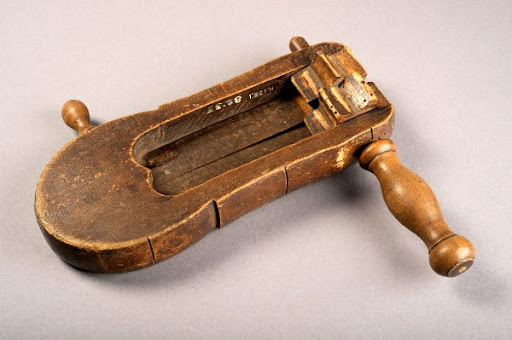
On the 29th day of the twelfth lunar month1 in the first year of the Kaixi2 era in the Great Song Dynasty, the bangs of a watchman’s rattle (one slow, four fast) echoed inside Línān City. It was already the fifth watch3.
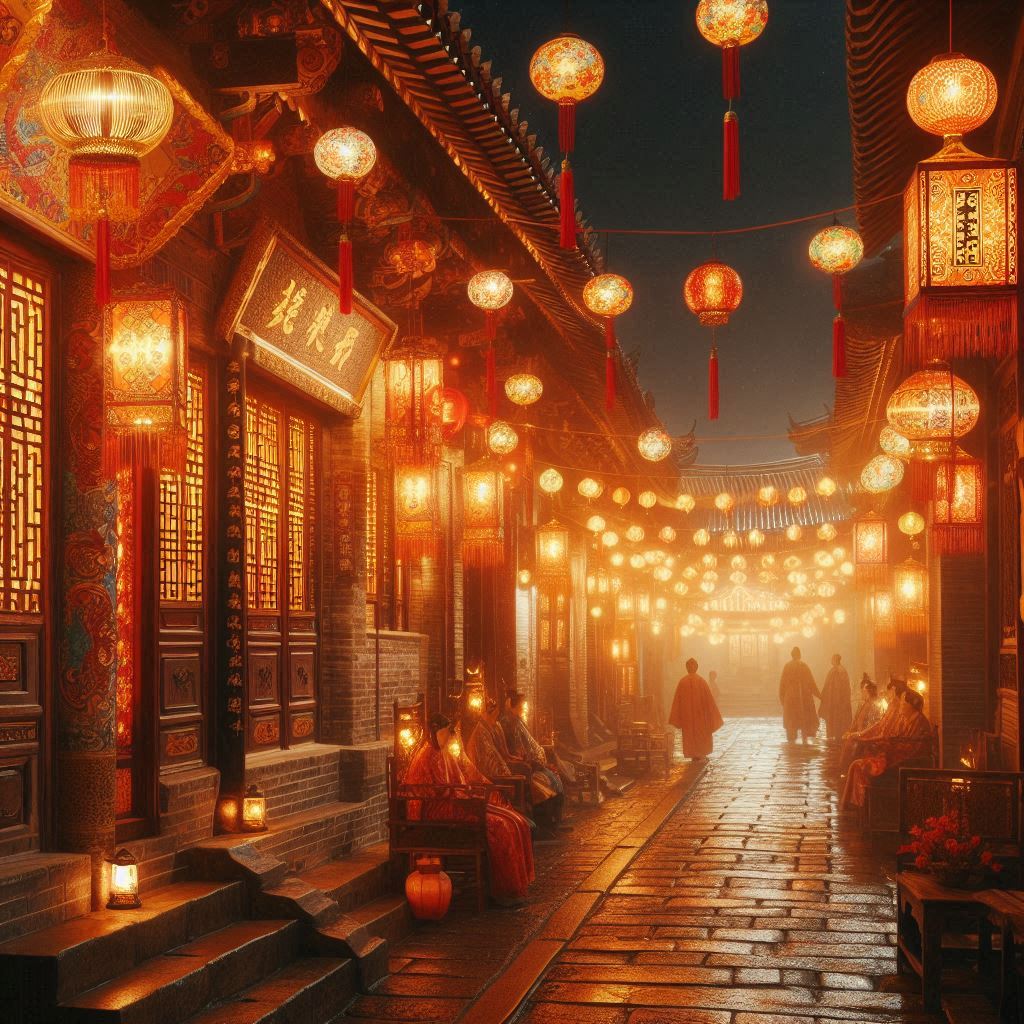
Lunar New Year approached with the end of another year, as thousands of doors and ten thousand households throughout Línān City4 were brightly decorated with lanterns and colorful banners. All of the streets and alleys shone as bright as shooting stars; the same was true at Tài Xué in the northern part of the city.
(T/N: Tài Xué was the name of the Imperial College, teaching Confucianism and Literature amongst other subjects.
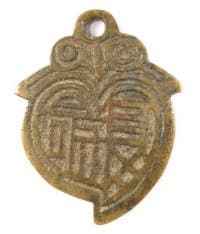
Tài Xué housed 20 dormitories5, with more than a thousand students. Those students who were too far from home and chose to remain in the dormitories to celebrate the Festival had a few days previously begun preparing to take their leave of the old and usher in the new year. They put up new brand-new Peach Charms6 in the dormitories and hung brightly decorated lanterns.
Not long after the watchman’s rattle sounded out the fifth watch, the lanterns on either side of the “Xíshì Zhāi” plaque7 suddenly swayed lightly back and forth a few times.
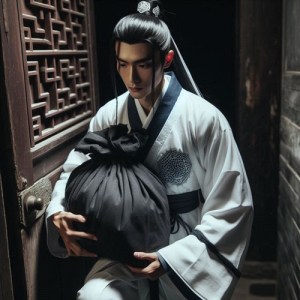
With a high creaking sound, the door of the dormitory opened a crack. An individual wearing a student’s qīngjīn8 came out the door from inside, clutching a bundle wrapped in black cloth.and walking between the dormitories towards the southeast corner of Tài Xué.
The man’s surname was Sòng and his given name was Cí, He was twenty (20) years old and an Outer College student9 enrolled in Tài Xué for less than a year.
There were lanterns and fireworks10 all around overflowing with color and casting light, but Sòng Cí did not glace around. Focused, he merely lowered his head and quickly strode forward. He passed the dormitories one after another and then on through the shooting grounds where he practiced archery on weekdays, until he reached the southeast corner of Tài Xué. Here, in front of him, stood a wall made from greenish-blue bricks broken only by a single moon gate. Inside the door, it was completely black without a single thread of light.

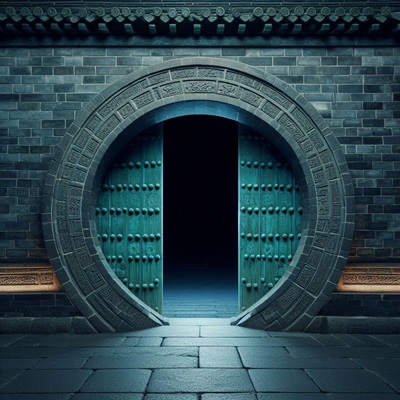
Sòng Cí glanced both ways and entered the moon gate. About 20 steps past the entrance, a lifeless building appeared out of the depths of the dark night.
Indeed, it was an ancestral hall — the Yuè temple.11
Tài Xué was located east of Jìjiā Bridge and north of Qiányáng Street; it was originally the residence of Yuè Fēi.12 Sixty-three years ago, Yuè Fēi was unjustly murdered in Dà lǐ Temple; his residence was confiscated13 by the imperial court and the following year was used to expand Tài Xué. Most of the buildings in the old residence were destroyed; only the Yuè temple in the southeast corner was preserved. However, four years prior, a large fire suddenly broke out and the Yuè temple burned to the ground.14 Now, the Yuè temple had been rebuilt on top of the original site.
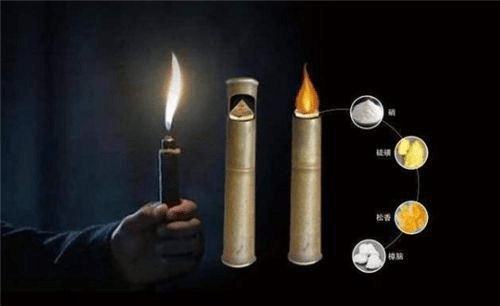
Sòng Cí walked up in front of the door to the Yuè temple and lit a fire stick15 Under the light from the flame, he saw an iron lock hanging on the door. The Yuè temple only has one door and it is locked; once locked, no one can go inside. He paid attention to the movement and sounds around him, making sure no one else was nearby, before opening the black cloth wrapped bundle he had been carrying this whole way. Incense sticks, paper money, steamed buns, and braziers were taken out by him one after another and placed on top of the steps in front of the door. Sixty-three years ago to the day, Yuè Fēi was unjustly killed. Sòng Cí came here alone late at night in order to secretly pay homage to Yuè Fēi.
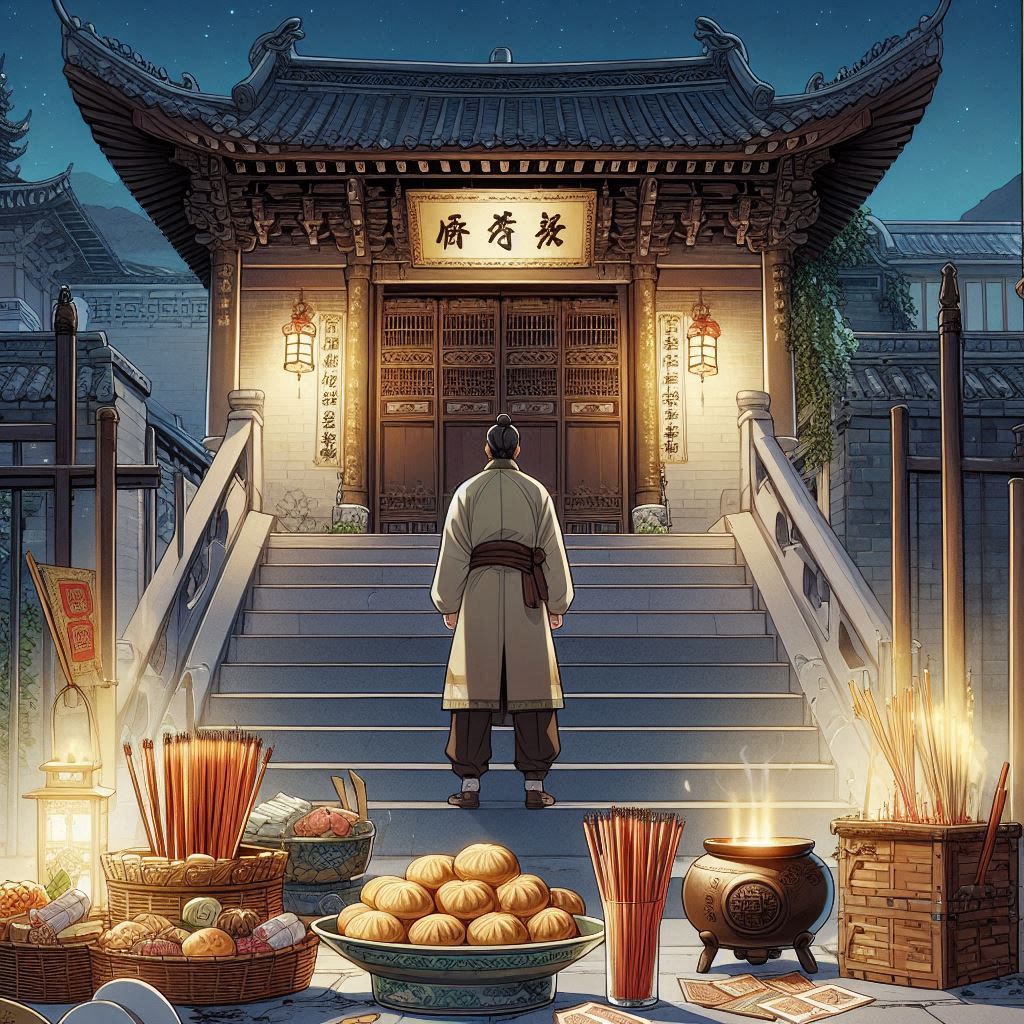
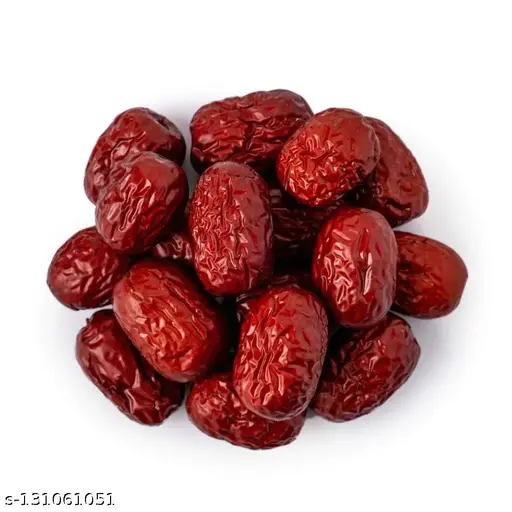
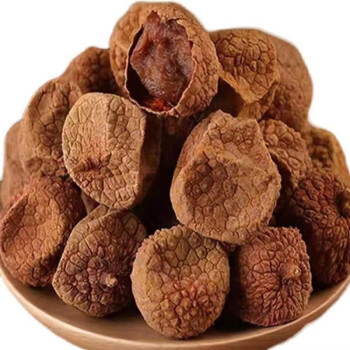
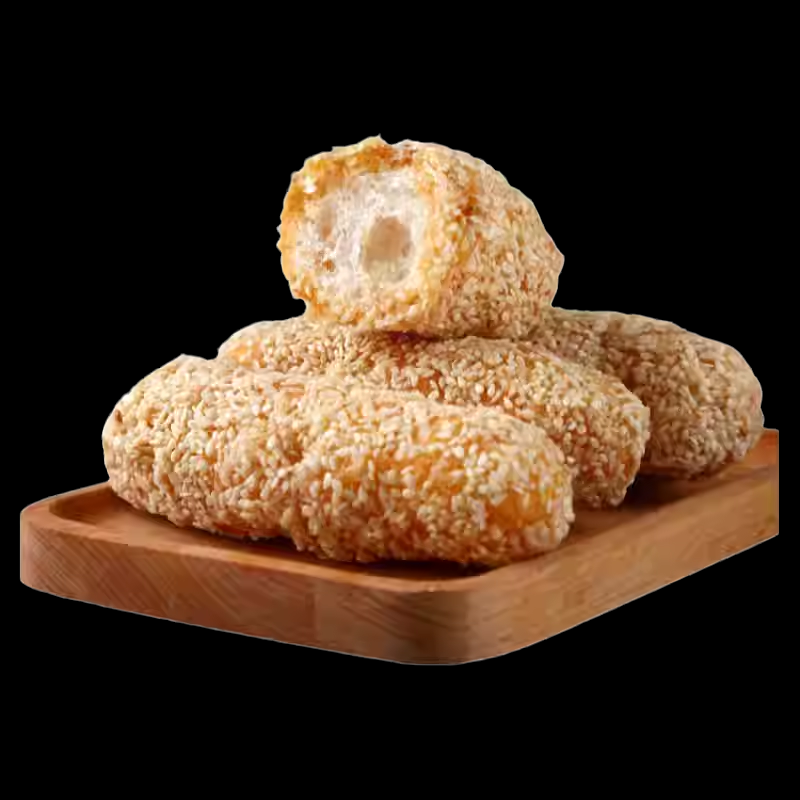
In the open space in front of the door, there were remnants of burnt incense sticks and paper ashes along with scattered offerings such as Jujube, dried lychees, and Polygonum Flower candy. As early as nightfall, many Tài Xué students could not wait for the 29th day of the twelfth lunar month to arrive and they came to the Yuè temple in groups to pay their respects. In the past, on Yuè Fēi’s memorial day, some students from Tài Xué would naturally come to offer sacrifices, but it was not usually very many. This year was quite different; the number of students arriving to worship at Yuè temple was several times more than in prior years.
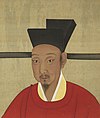
The reason for this was that the current Emperor had appointed Hán Tuōzhòu16 as a prime minister, determined to resist the Jin’s northern campaign and hoping to recover the Central Plains. To that end, a special edict was issued conferring the posthumous title of King of Hubei Province on Yuè Fēi, stripping Qín Huì of his royal title,17 and changing Qín Huì’s title posthumously from “Zhōng Xiàn” to “Miào Chǒu”18 much to the satisfaction of all for a time.
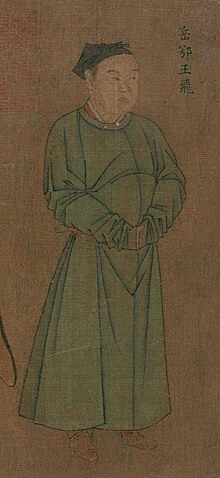
However, those students who came early to the Yue temple to offer sacrifices were stopped by the sīyè19 who arrived shortly after hearing the news. In Tài Xué, the sīyè was an academic official second only to the jìjiǔ; he was the one responsible for managing the teachings of Tài Xué. Since a fire caused by the students’ offerings burnt down the Yue temple four years ago, Tài Xué no longer allowed students to enter the temple to worship. Because they were violating the academy’s orders, the sīyè, named Hé Tàijì, wrote down the name and surnames of those students who were participating in the worship at the scene, punishing them by canceling their future leisure time.20 It was further declared that if any others entered Yue temple to worship without explicit approval, in addition to losing their leisure time, they would be given a low score on the moral conduct portion of the imperial examination.
Tài Xué implemented a three (3) college system, namely the Outer College, the Inner College, and the Superior College.21 Promotion in College rank required the ability to meet the standards set by the Gōngshì22, which was subdivided into two parts — academic performance and moral conduct. In the event that a student received a low grade for moral conduct, he could not be promoted to a higher rank. Students from the Outer College could not be promoted to the Inner College; students from the Inner College could not be promoted to the Superior College; students from the Superior College would be directly dequalified from being awarded an official position. In this way, it concerned their academic studies and future prospects, against which no student dared to come to the Yue temple to worship Yuè Fēi until Sòng Cí appeared.
Sòng Cí had only passed the entrance exam for Tài Xué in the early spring of this year. This is the first time he had the opportunity to visit Yue Temple to worship on the anniversary of Yuè Fēi’s death. Naturally, he did not want to give up the qualifications needed for promotion. But Yuè Fēi had been loyal to the end, dedicating himself to his country, and was the person Sòng Cí revered the most in his heart. In those days, it seemed that if not for Yuè Fēi’s fierce and violent battle against the invaders, putting in order the rivers and mountains,23 perhaps a vast swathe of the Song Dynasty’s territory24 would long ago have been lost. Yet, this same Yuè Fēi was actually unjustly harmed by a villain and finally died from persecution while in prison. The sky shone clearly25 now that Yuè Fēi had been exonerated from the unjust accusations and was granted the noble title of “King.” No matter what, Sòng Cí must also come in person to Yue Temple to pay his respects. To this end, he deliberately waited until the fifth watch, thinking everyone would already be asleep and Hé Tàijì would not still be guarding the Yue Temple; only then did he stealthily slip away from Xíshì Zhāi and rushed over here.
The incense sticks in front of Yue Temple, the paper ashes and offerings. . . it was Hé Tàijì who, when he ousted the students between 11 pm-1 am26, ordered the servants to clear them away. As for the iron lock on the door, presumably it was also Hé Tàijì who locked it? Sòng Cí could not enter Yue Temple, so he was forced to offer his sacrifices outside the door. He lit the incense sticks, set up the steamed buns, and knelt on the stairs facing the Yue Temple plaque while sincerely kowtowing. He then picked up the paper money and burned it inside the brazier.
A piece of the paper money turned into ashes. the flames pierced the darkness, and before Sòng Cí’s eyes it gradually became brighter.
However, it was strange. . . he was worshiping outside the door, but not only was there light outside the Yue Temple, even the inside of the Yue Temple was similarly shining. The light from inside the Yue Temple was reflecting on the window, several times brighter than the brazier’s flame, so bright it was somewhat blinding.
Could it be that there was someone else worshiping inside Yue Temple? Certainly, the door to Yue Temple was clearly already locked from the outside; moreover, such a bright light absolutely could not be burning ritual paper money. It appeared to be a large fire.
Sòng Cí slightly frowned, standing up and approaching a crack in the door to peer inside.
Inside the Yue Temple, a large fire was burning with smoke rising all around it. Then, in the thick smoke, he could vaguely see a solitary figure. The person was hanging in midair, the body motionless. With the fire burning alongside, before long, the body would be burned.
Sòng Cí was startled and wanted to open the door to save the person, but the door was tightly locked with the iron lock and could not be opened. He then moved on to the window27 , but unexpectedly all the windows were also secured from the inside. He had no time to think and grabbed the brazier up from the ground, poured out the burning ritual money, and swung the brazier to smash a hole in the window.
With no time to think, he grabbed the brazier on the ground, poured out the burning paper money, and swung the brazier smashing a hole in the window.
Sòng Cí climbed in through the window and rushed up beside the fire, only to see that the man hanging in the air was clothed in a loose-fitting blue Confucian robe and had a square face with thick eyebrows. It was Tài Xué’s sīyè, Hé Tàijì, Around Hé Tàijì’s neck was hanging a long, thin iron chain; the other end of the iron chain was suspended on a beam in the room’s ceiling. Sòng Cí clutched Hé Tàijì’s body, released Hé Tàijì’s head from the iron chain, and rapidly carried him to the window; maintaining sufficient distance from the smoke and the fire. He called “Master sīyè” several times, but saw no response from Hé Tàijì. He urgently searched for breath but found that Hé Tàijì had already stopped breathing and was dead.
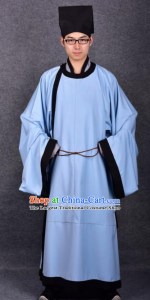
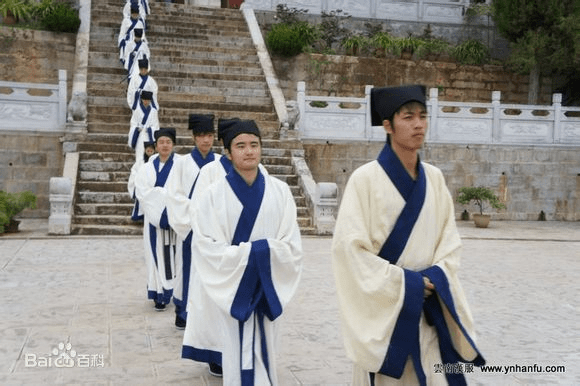
“宽大的青布儒衣” – There are variations in Confucian robes, but it might have looked something like this
At that moment, many thoughts flashed through Sòng Cí’s mind. When he arrived at Yue Temple, the door to Yue Temple was already locked. Clearly, before he came, Hé Tàijì was already inside Yue Temple. Since then, he had never left the door of Yue Temple. All of the windows were also secured from within. During this period, no third person had entered or left Yue Temple. In other words, Hé Tàijì had always been alone, the only person inside Yue Temple. In which case, the fire inside Yue Temple could only have been lit by Hé Tàijì’s own hands; he then used the iron chain to hang himself. In this way, Hé Tàijì must have committed suicide.
But, if he wanted to commit suicide, hanging himself would have sufficed. There was no need to do more; so why then light the fire in order to burn himself to death?
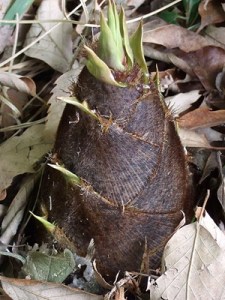
Suddenly, Sòng Cí felt an itch on his hands. He stretched out his palms; a strip of red appeared in the hollow. Looking closely, it turned out they were pierced by some very fine, dense hairs that appeared to resemble whiskers on the shell of bamboo shoots. Just now, he had carried Hé Tàijì’s body; he now inspected Hé Tàijì’s body and, on the back of his Confucian robes, found there were many fine hairs, all resembling the whiskers on the shell of the bamboo shoot. Bamboo Shoot shells are usually only found to exist in places where bamboo grows. Certainly, Yue Temple does not have any bamboo planted; even considering all of Tài Xué, there is not a single place where bamboo grows. These whiskers on Hé Tàijì’s back, where did they come from and how did they get here? Was it possible that before he died, he visited some bamboo forest?
(T/N: his palms appear to have been bleeding; the hairs themselves are not red.)
Sòng Cí did not have time to look into these doubtful points, because the intensity of the fire was increasing more and more. There was nothing flammable near the altar and the fire was only burning on the altar’s platform; it would not spread for a while. Although, no matter what, if ignored it was likely to sooner or later reach and ignite the beams and pillars; the entire Yue Temple might also burn to ashes. Sòng Cí knew that relying on his own ability to carry water to put out the fire was no different than throwing a cup of water on a burning cart of firewood28. At present, to extinguish the fire, it was vital to return to the dormitory and awaken more of the students together; furthermore, it had to be quick, without a moment’s delay.
Still, once he did this, the matter of his violation of the orders about worshiping Yuè Fēi would immediately be known to everyone; consequently, he quite possibly would be disqualified from promotion. More troublesome is that he may be seen to be connected with Hé Tàijì’s death. It is important to realize that Hé Tàijì’s suicide has many doubtful points. Other people quite possibly may believe that Hé Tàijì died an unnatural death, and he may be looked upon as the only person present at the scene. Naturally, he may be considered the vicious criminal suspect that murdered Hé Tàijì.
Sòng Cí very clearly knew what the consequences would be; however, there is justice in the world. A morally upright person is not afraid of a crooked shadow.29 Because he had no responsibility in Hé Tàijì’s death, he was not worried about people’s suspicions.
Sòng Cí moved to take Hé Tàijì’s corpse out of Yue Temple through the window, in order to avoid the corpse being burned.
At this time, dawn had yet to break and it was the darkest time of the night. As far as the eye can see, outside of Yue Temple was a thick darkness resembling ink; the night scene was like a cage.
He did not hesitate at all, rushing into the night and running quickly towards the brightly lit dormitory.
Footnotes
- Winter, between December 22 – January 21* ↩︎
- When an emperor reigned, the years were sometimes broken up into “eras”. Kaixi (開禧) spanned from 1205 – 1207 and was the third era during the reign of Emperor Ningzong (寧宗). He reigned from 1194 – 1224. This means that the novel is opening in 1205, around the middle of Emperor Ningzong’s reign. ↩︎
- Between 3:00am – 5:00 am. ↩︎
- Línān City is an area on the outskirts of Hangzhou in Zhejiang Province. It’s not far from Shanghai in center of the eastern border. ↩︎
- Should I should be translating this as “Dormitories” or “Halls”? . . . I’ve seen other sources translate it either way. ↩︎
- Peaches symbolize ‘longevity’ and charms were popular in ancient China ↩︎
- The plaque is one of those large, horizontal signs above the door or gate with the name of the hall or compound. The Imperial College was divided up into 20 halls, each with their own name. This plaque reads “习是斋” or Xishi Zhai, the name of one of those halls. ↩︎
- The Qīngjīn was a long uniform with a blue or cyan collar that students wore in the Song dynasty. ↩︎
- This is explained later, but the university had three divisions with the Outer College being the lowest level, You had to pass an examination to move up each level. So he’s basically a freshman. 👨🏻🎓 ↩︎
- Idiom, basically meaning the festivities were plentiful ↩︎
- 祠 is a type of ancestral temple where sacrifices and prayers could be offered to the ancestors. It holds the ancestral tablets. ↩︎
- Yuè Fēi (1103 – 1142) was a revered general known for his bravery in the wars between the Southern Song and Northern Jin empires. Despite his crucial role and public popularity, he was framed and executed by the Song government amid fears that he (or his supporters) may negatively impact in peace discussions. He is the main character in the CDrama “The Patriot Ye Fei” (2013). ↩︎
- Literally “籍沒” meaning to register wealthy families to collect tax revenue. So it was basically taken as a debt owed to the imperial court? 🤔 ↩︎
- 七零八落 is an idiom meaning everything was broken and in disorder. ↩︎
- 火折子 (literally ‘fire stick’) was a tool that can be reignited multiple times to produce an open flame. Similar to the lighters of today but these were in tubes. ↩︎
- Hán Tuōzhòu (1152 – 1207) was a Song Dynasty politician who led the failed military campaigns against the Jin Dynasty, aiming to reclaim lost territories. The significant losses led to his eventual execution. ↩︎
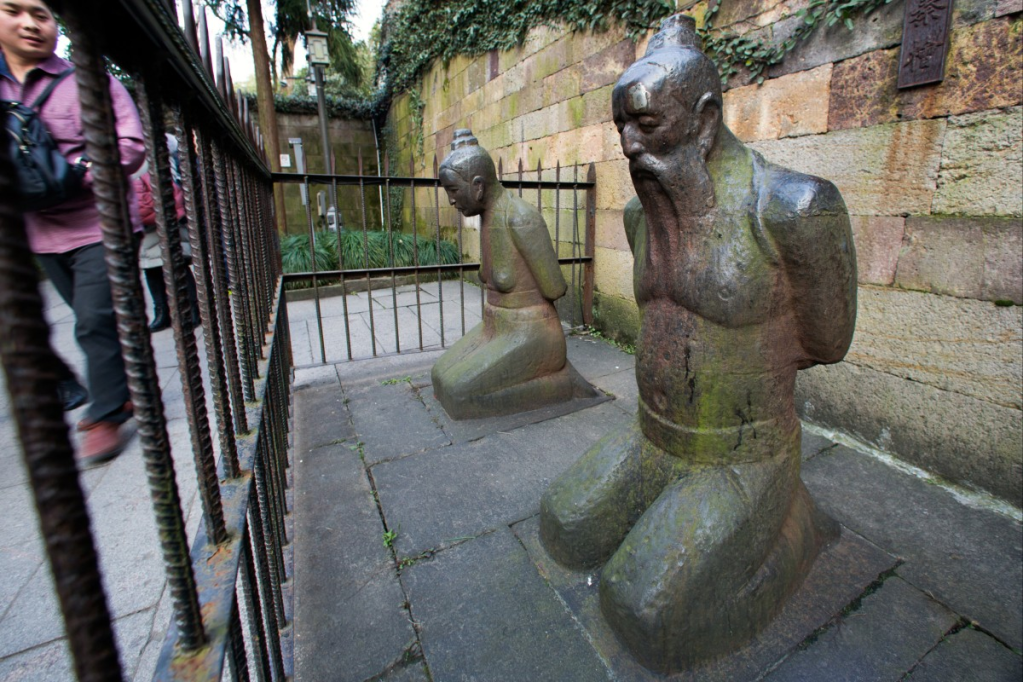
- 鄂 is an abbreviation for Hubei Province. Qín Huì (1091-1155) was a controversial politician who is often accused of being involved in Yuè Fēi’s death amongst other alleged misdeeds. Historically viewed poorly, statues of Qín Huì and his wife were arranged to kneel in front of Yuè Fēi’s tomb. Qín Huì is a character in the CDrama “Full River Red” (2023). Whether Qín Huì was actually a villain is is still debated. ↩︎
- 忠献 (Zhōng Xiàn) uses characters that refer to a “loyal, devoted, honest, dedicated, and worthy person”. 缪丑 (Miào Chǒu) uses characters that refers to a clown or someone “shameful, ugly, and disgraceful”. Zhōng Xiàn was actually a good name but after Qín Huì, supposedly no one else was willing to use it 😬 ↩︎
- Sī Yè referred to the person who was the “second in command” or “deputy chief” of the Imperial Academy. He assisted the JìJiǔ (the highest-ranking official) and was responsible for the academy’s educational policies. ↩︎
- 留待来日罚以关暇. Seems to be something like “postponing for the future their punishment by means of 关暇”. 关 can mean “to turn off / shut off” and 暇 is “leisure” . . . I think he announced that he is cancelling their future leisure time. Can anyone confirm, please? 🙏🏻 ↩︎
- If you are at all interested in learning more about the college, this is a good article. ↩︎
- The public examination for entering the college ↩︎
- 收拾河山 translates to “cleaning up the rivers and mountains.” It is very close to 收復河山 which means recovering lost territory. I assume this is referring to cleaning up the territory by pushing the enemy out and restoring the borders? 🤔 ↩︎
- 半壁江山 means “half of the country” and is often used when talking about the enemy conquering territory. It can be understood to be a very large amount of land. ↩︎
- 天日昭昭 means “the sky is clear” or “the sky is shining brightly”. 天日 also appears in phrases like “暗无天日” (a world without justice) and “重见天日” (to see the light again, freed from oppression). ↩︎
- 子时 corresponds to this time (11:00pm – 1:00am) ↩︎
- It actually says he “moved on” as in he accepted the situation / avoided dwelling on unpleasant things + window. So I assume he quit messing with a locked 🚪 and moved on to the 🪟. ↩︎
- Idiom, meaning a completely inadequate effort (a drop in the bucket). ↩︎
- Chinese saying: “No matter how straight a person stands, his shadow will still be crooked. But no one will say you are not standing straight just because of a crooked shadow. An upright person is not afraid of their shadow”. ↩︎
Other Notes:
- ALL PICTURES AND FOOTNOTES ARE ADDED BY ME! This is an actual, official historical novel so no photos or footnotes.
- I couldn’t find a picture of a Chinese “Watchman’s Rattle” so I’m not sure how different it looks from the one pictured. 🤷🏻♀️
- Not a criticism, but the author frequently uses run-on sentences, which can make the meaning confusing in English. To clarify, I have broken up some of the longer ones into separate sentences.
- This book contains formal terms as well as significant historical and cultural references. The numerous footnotes are essential for my Chinese language and history learning, although they may not be necessary for all readers. I appreciate the reader’s understanding! 💗
The Original Novel (Raw)
*I have not read anyone else’s translation of this novel so I have no idea how others have translated it. I’m just playing around while I try to learn Chinese 😊
If you are interested in purchasing the novel in its original Chinese, check it out on Amazon. It’s available on Kindle! The book is “宋慈洗冤笔记(独家首发|1-3册) ” by 巫童 (ISBN: B0CLK9L9HQ).
Disclaimer
This website is absolutely not a professional resource and is purely my own personal way of trying to learn various languages. If you see a mistake, by all means please let me know in the comments as long as you do so in a friendly way. ❤️


Leave a Reply