I recently have been covering thirteen (13) basic animal terms in Korean, Japanese, and Chinese. These included the words Animal, Cat, Dog, Bird, Fish, Cow, Mouse, Horse, Pig, Rabbit, Tail, Wing, and Bear.
As with so many terms in these three languages, I have discovered that Japanese and Korean terms are often initially rooted in the more traditional Chinese characters. Modern Chinese may have adapted to more simplified terms, but they are also often grounded in those more ancient characters.
When learning new languages, if often helps me to understand and recall terms when I understand where they came from and why they are the way they are. Especially where Chinese or Kanji characters are involved; if I can figure out the pictographs or combination phrases they are depicting, I can remember them more clearly.
With that in mind, here is what I have learned about these basic animal terms. 😊
Resources:
Animal(s)
| Traditional Chinese | Simplified Chinese | Japanese | Korean |
|---|---|---|---|
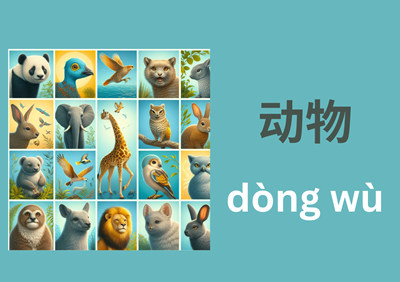
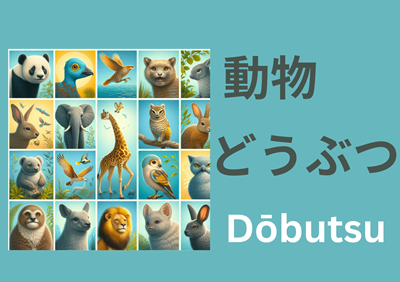
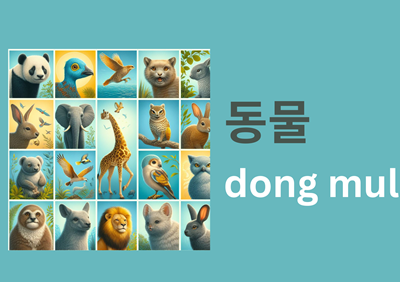
| 動物 dòngwù | 动物 dòngwù | 動物 dōbutsu どうぶつ | 동물 dongmul |
The traditional character is a combination of 動 + 物 and basically means ‘moving thing‘.
- 動 is a character representing movement or action. It is a combination of:
- 重 – used here for the shared phonetic sound of ‘dòng’ 🏋️
- 力 (‘strength, physically strong‘ – might be a wooden plough (required strength to wield) or an arm bent outwards (like showing off your muscles? 💪) .
- 物 is a character representing something concrete or made of matter. It is a combination of:
- 牛 (‘cow, bovine’) – Used to look like a cow with horns, maybe he now has an ear tag? 🐮 – I actually remember this one pretty well because I liked ordering beef when I lived in Chinese 🍴. I’m not used to it being skinny-fied as part of a larger character though like it is here.
- 勿 – used here for the shared phonetic sound of wù.
I’m not really sure how physically strong (重) became a movement or action or how cow or bovine (牛) was chosen to represent a ‘tangible thing’. But the combination word (動物) means a moving thing and I suppose is meant to represent a large, strong object plodding along, like a hear of cows grazing the fields.
I have noticed that often the Chinese characters have a combination of two smaller characters — one representing the meaning attached (e.g., 牛) and one representing the pronunciation (e.g., 勿). For example, when you are talking about cows, the character 牛 may be pronounced as niú (e.g., beef is 牛肉 or niúròu – cow meat). But in this case, they want the meaning of 牛 (bovine) but are pronouncing it as wù, so you get 物.

The Simplified Chinese uses the same pronunciation and second character but has replaced 重 with 云 in 动. Apparently 云 depicts clouds ☁️over the earth and means ‘clouds’ but it is also a homophone with the character meaning ‘to say’ and has also adopted that meaning. Not sure if it is meant to mean ‘clouds’ or ‘to say’ in this character – neither one particularly screams ‘animal‘ to me when combined with 物 (a concrete or tangible item). Tangible items out under the clouds? 🖼️

Japanese Kanji still uses the traditional character (動物) but pronounces them slightly different as ‘dōbutsu’. This is written as ど[do] + う/u/ + ぶ [bu] + つ [tsu] or どうぶつ in Hiragana.
Korean Hanja retained the ‘dong’ in 동물 but somehow the 物 ‘wu’ became ‘mul’. So this reads as ‘dongmul’.
Cat
| Traditional Chinese | Simplified Chinese | Japanese | Korean |
|---|---|---|---|
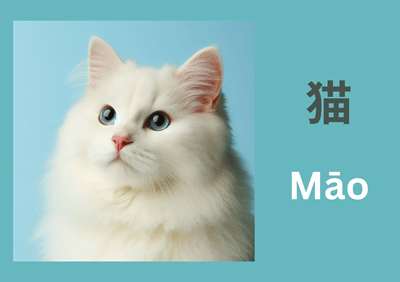
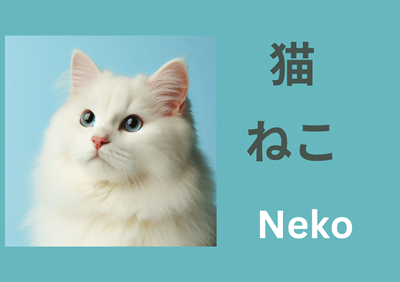
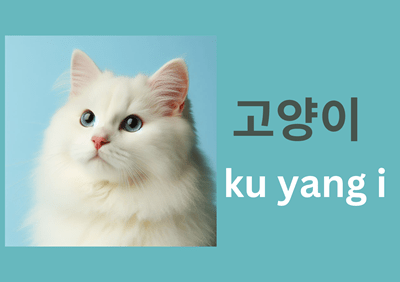
| 猫 miāo | 猫 māo | 猫 neko ねこ | 고양이 goyangi |
The traditional character is a combination of 犬 + 苗 and is a fun one to figure out.
- Apparently 犬 in the old, old pictographs was written to be the image of a dog but eventually the character was turned vertically and kept morphing until it reached became 犬. I find this one questionable (not in that the history of the character is right but in that it looks anything like a dog 🐕at this point).


- 苗 – used here to represent the the shared phonetic sound of miáo.
So as best as I can tell, ‘cat’ is just a dog that says ‘miáo’. 😹
The simplified Chinese term for ‘cat’ is the same as the traditional version (猫) and pronounced the same too.
Japan uses the same character (猫) but calls it ね [ne] + こ [ko] or ‘neko’. Not sure where the pronunciation came from. 🤷♀️
The Korean is actually quite a bit different with 고양이 (goyangi). Apparently, it is a combination of 고 (go) + 양이 (yangi). From what I have learned, the actually root word is 괴 (goi) with the rest as a diminutive suffix meaning ‘a small 괴’. Since 괴 seems to have meant ‘cat’ to start with, I think 고양이 is just a cutesy way to say ‘kitty cat’ more or less. Apparently 괴 is no longer used. I’ve heard that some people will say 나비 (nabi) which means ‘butterfly’ 🦋, but I haven’t done the research to know where that came from.
Dog


| Traditional Chinese | Simplified Chinese | Japanese | Korean |
|---|---|---|---|
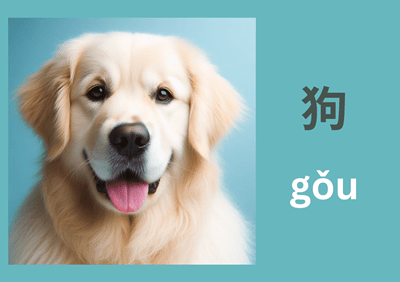
| 犬 quǎn | 狗 gǒu | 犬 inu いぬ | 개 gae |
The traditional character is just the single character 犬 that we covered above under ‘cat‘. As shown there, it originally was a pictograph of a dog🐕 that eventually changed to the current character.
Japan still uses that same character but pronounces it as い [i] + ぬ [nu] or inu instead. You may be familiar with this in the name ‘Inuyasha’ from the popular Japanese anime; unless I am misremembering, he was a half dog-demon and so has the ‘inu’ in his name. Funnily enough, China pronounced his name as 犬夜叉 or Quǎn yè chà, using that original traditional character and pronunciation (rather than the newer simplified character or the Japanese pronunciation).

It appears that Chinese now uses the simplified 狗, a combination of 犬 and 句. Again, we saw this use of 犬 previously with cat (猫); notice that both 猫 and 狗 share the same first symbol. That curved line with two slashes (犭) is just 犬 when it is simplified to save space. Chinese often alters the shape of a character to make it smaller or skinnier when putting multiple characters together in a new word.
In the way we have seen before, 狗 is combining one symbol representing the meaning (犬 meaning dog) and one symbol representing the pronunciation (句 pronounced as ‘gǒu’). I’m not quite sure why they kept the 犬 but changed the pronunciation from quǎn to gǒu in simplification. Perhaps it reflects some sort of change in dialect or just slang as time went by? 🤷♀️
The Korean 개 originally came from 가히 which was the adverbial form of a word that together seems to have mean ‘on the side of’ or ‘rightly so’? I don’t quite understand how that came to represent a ‘dog’ (the other meaning of 개 is apparently an inlet – water with land on its sides?) except that dogs tend to stay by your side and are known for their loyalty? 🐕.
I do however understand that they eventually just dropped the ㅎ [h] so that it went from 가히 [gahi] to 개 [gae].
Bird

| Traditional Chinese | Simplified Chinese | Japanese | Korean |
|---|---|---|---|
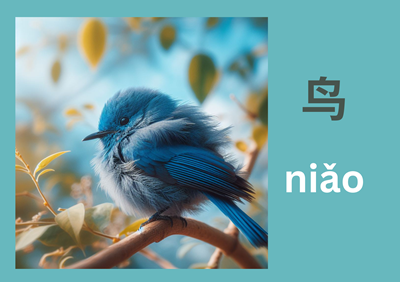
| 鳥 niǎo | 鸟 niǎo | 鳥 tori とり | 새 sae |
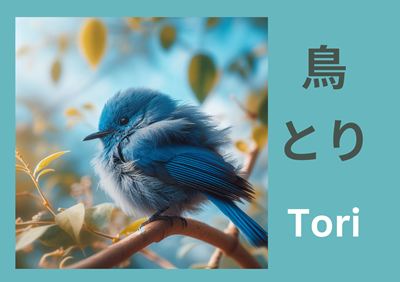
The traditional Chinese character (鳥) is a rather complicated one with a lot of various strokes. It apparently originated as a pictograph of a bird with the head facing left, a tail, and the feet. This later morphed into a more advanced pictograph with lines representing the face pointing right, an eye, feathers, and the three-pronged foot. That then shifted into the character used by Japan still today.


Simplified Chinese no longer uses this older character but has continued to adopt the pronunciation (niǎo). Japan uses that traditional character but has a different pronunciation (と[to] + り[ri]).
Korea Hanja pulled in the same traditional character (鳥) which they pronounced as 새 조 or sae jo. This has since be shortened to the phonetic 새 (sae) today. 새 apparently has quite a few alternative meanings so this one is going to be a little harder to remember🤨
Fish

| Traditional Chinese | Simplified Chinese | Japanese | Korean |
|---|---|---|---|
| 魚 yú | 鱼 yú | 魚 sakana さかな | 물고기 mulgogi |
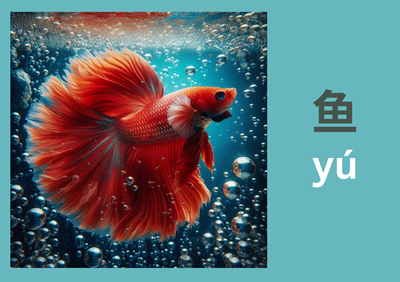
The traditional Chinese character is supposed to represent a fish hanging vertically with the head at the top and the fins at the bottom 🐟. I personally think the pictograph is difficult to see in the traditional or simplified versions. 🤷♀️


Simplified Chinese really isn’t that different; they still use the same pronunciation and the only change to the character is a single horizontal line on the bottom instead of the four short strokes.
Japan again uses the traditional character but with its own pronunciation — さ[sa] + か[ka] + な[na].
In this case, the current Korean term is derived from a much older word — 믌고기. 물 (mul) means ‘water.’ ㅅ has no particular meaning but changed the pronunciation slightly. 고기 is an even older word that meant both ‘meat’ and ‘fish’ (but not fish meat weirdly enough 🤨). I feel like ‘water + fish’ would be more likely to refer to deep sea fish, but apparently it just means fish in general. Not sure why they decided to add the 물 to a word that already meant fish though.
Cow

| Traditional Chinese | Simplified Chinese | Japanese | Korean |
|---|---|---|---|
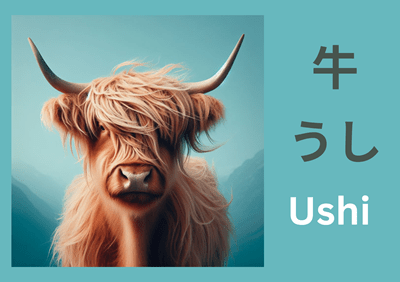
| 牛 niú | 牛 niú | 牛 ushi うし | 소 so |
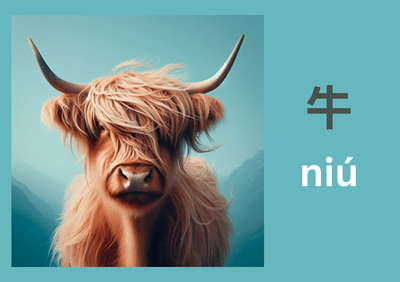
The pictograph of 牛 is supposed to represent a cow’s face with his ears as the top line and a nose as the middle line. I believe the stroke on the upper left is supposed to be a horn? – That’s what my Chinese students say but I take it with a grain of salt 😂


Thankfully, both simplified Chinese and Japanese use the same character, although Japan as usual has a different pronunciation.
The initial Korean version was 쇼 (syo) which they think is related to another term 首 (siu) used in Goguryeo as an alternative to 牛. It has since been shortened to 소 (so). I’m not quite sure how 牛 became 首 although the second also sort of looks like a cow with ears, a line for the horns, and a body.
Mouse
| Traditional Chinese | Simplified Chinese | Japanese | Korean |
|---|---|---|---|
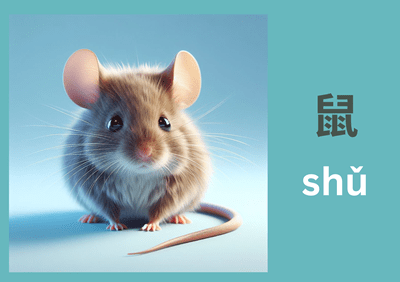
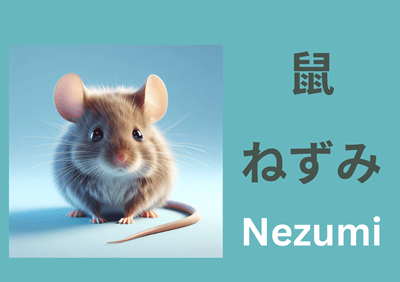
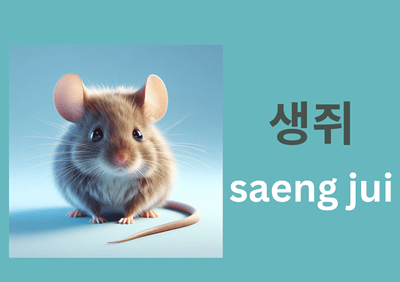
| 鼠 shǔ | 鼠 shǔ | 鼠 nezumi ねずみ | 생쥐 saeng jui |
The pictograph of 鼠 is supposed to depict a mouse with his mouth open showing his teeth. The upper part is the face and the bottom is his two feet pointing left and his tail on the right.


Simplified Chinese still uses the same character and pronunciation, Japanese has the same character but is pronounced as ね [ne]+ず[zu]+[mi].
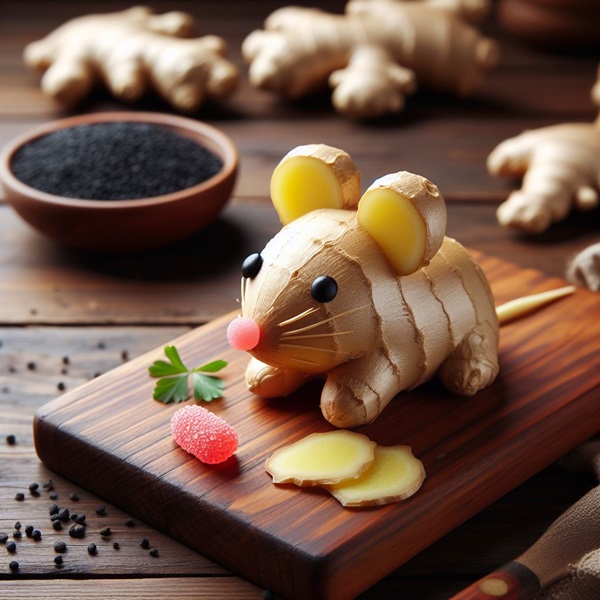
생쥐 is actually very precisely a ‘house mouse’ or a small mouse that often lives in people homes. 생 is the word for ‘ginger root’ and 쥐 is the word for ‘rodent’. 쥐 is a broader term and includes rats and mice. Basically, 생쥐 is a rodent the size of a ginger root which I personally find adorable 🐁
Horse
| Traditional Chinese | Simplified Chinese | Japanese | Korean |
|---|---|---|---|
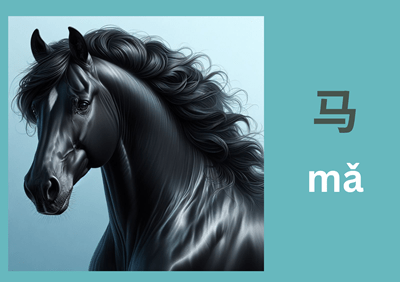
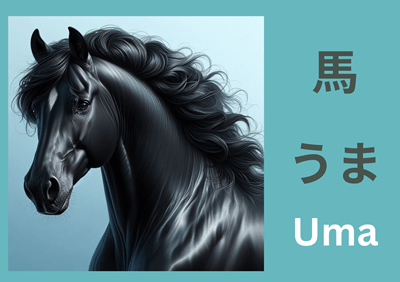
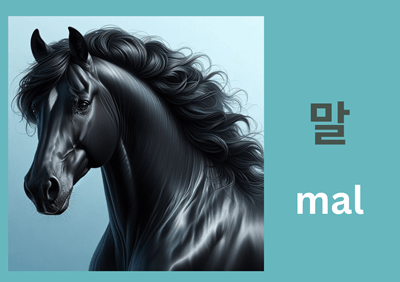
| 馬 mǎ | 马 mǎ | 馬 uma うま | 말 mal |
The origins of the traditional Chinese pictograph is sometimes a little hard to see; they don’t look very much like horses to me. To be honest, I think the final traditional character (馬) looks a lot like the current emoji one — 🐎. He is facing left with his mane flying backwards and his feet and tail on the bottom.


Modern Chinese uses 马 , a simplified form of 馬 (note that the overall outline is similar but it just uses a box for the head and mane and the four legs are a single horizontal line). The pronunciation actually carries through into both Japanese (which uses the traditional character) and Korean.
Pig


| Traditional Chinese | Simplified Chinese | Japanese | Korean |
|---|---|---|---|
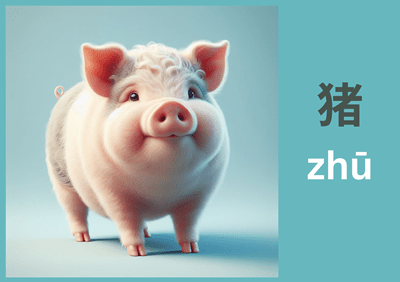
| 豬 zhū | 猪 zhū | 豚 buta ぶた | 돼지 twaeji |
The traditional Chinese Character took a bit of a trip on the way to it’s present form. 豬 is a combination of two characters — 豕 or shǐ which is apparently an even older term for pig and 者 or zhě which points towards the pronunciation. Apparently, 豕 is supposed to represent the shape of a pig hanging vertically with the nose, two ears, feet, and a tail. It’s easier to see in the Oracle Bone era.


The Simplified version ditches the old 豕 and replaces it with the same 犭(simplified 犬) that we saw in ‘dog’ and ‘cat’. It still means ‘dog’ and is combined with the 者 for pronunciation. So, where a ‘cat’ 😹 is a dog that says miáo, a ‘pig’ 🐷is a dog that says ‘zhū’ (I think it’s meant to be sort of like the grunting sound they make?). 😂 Not gonna lie, I love this.
Japan actually takes a different approach and for the first time doesn’t use the Traditional Chinese, or at least it ditches the phonetic 者. Note however, that it is still using that really old, pre-traditional Chinese character 豕 in it’s word for pig (豚). The Japanese word is actually a combination of a modified 肉 (meat) and 豕 (pig). It is pronounce ぶ[bu] + た[ta].
The original root word in Korean appears to have been 돝 (tot), a word meaning ‘pig’ or ‘swine’ that shows up in the 1100’s era Middle Korean. It appears linguists are quite sure the path that resulted in the modern term 돼지 (dwaeji) but this is possibly a combination of 돝 (pig) and 아지 (diminutive, a small one). So, like Cat eventually became ‘Kitty’, Pig eventually became ‘Piggy’ and the older, original forms faded out 🤷♀️.
Rabbit
| Traditional Chinese | Simplified Chinese | Japanese | Korean |
|---|---|---|---|
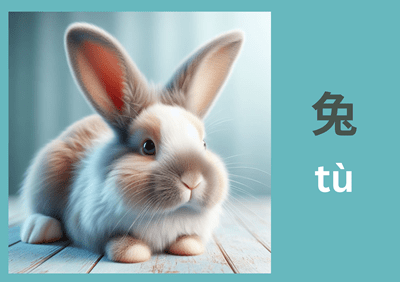
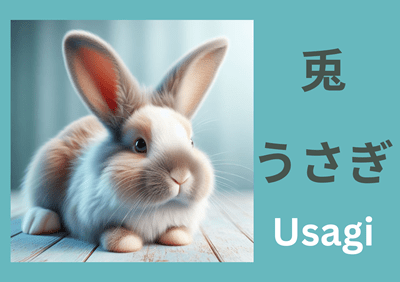
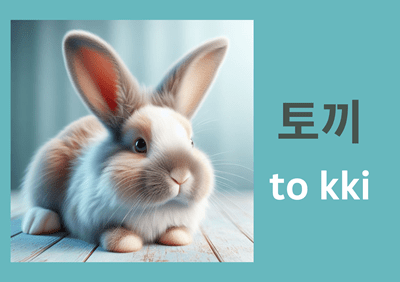
| 兔 tù | 兔 tù | 兎 usagi うさぎ | 토끼 to kki |
I’m all for supporting the arts, but whoever thought the old pictographs looked like a bunny had clearly never met a bunny 🐇before. Or perhaps, I’m just not seeing it 🤨. I think I see the bunny ears? . . . . dunno.


Anyway, I actually think the final Traditional and Simplified form looks more bunny-like 兔 – I think the two boxes are the cheeks, the ear flopped on top, and the two curly strokes as his mouth.

The Japanese is quite similar but has a straight line on top instead (兎) and it is pronounced う[u]+さ[sa] +ぎ[gi].
Korean pulled over the ‘tù’ from the traditional Chinese with 토 (to) but it is not clear why they have added the 끼 (kki) to the end. It’s likely from another dialect / language from Northern China that used tuksakī to mean ‘hare’ or ‘rabbit.’ But then I’m not sure where that northern term got the ksakī from. 🤷♀️
Bear



There is actually a much older term for bear in Chinese, written 能 and pronounced néng. The path of the pictographs for bear is actually kind of funny to see. It reminds me of those medieval paintings of animals and makes me laugh 😂. So I’m going to go out on a limb and guess that 能 has the bear’s four legs on the right, his head in the upper left, and his body in the lower left?


Anyway, this old character for bear was eventually combined with 炎 which you see in the four tiny strokes on the bottom of the traditional Chinese character 熊. 炎 is the phonetic signifier which is where I get rather confused. Supposedly, 熊 is the symbol for bear on top with 炎 on bottom showing that it is pronounced as yán. And yet, somehow the traditional and simplified Chinese both show pronunciation as ‘xióng.’ If the pronunciation changed, I would have expected the phonetic signifier to change as well but it still has the 炎 or four small strokes on bottom.
However it works, the Traditional Chinese and Simplified Chinese both use the character 熊 with the pronunciation of xióng.
Japan uses that same character but pronounces it as く[ku] + ま[ma]. I actually remember this one from the old Japanese Gokusen dramas. One of the star’s students was named Kuma.
Korea started with the same original root character but it later morphed into ‘kwòmá’ in middle Korean. Apparently during the Baekje dynasty 金馬 was used in Korea for bear, borrowing from the character for gold (金) and horse (馬) which we already studied. So a bear 🐻is a ‘gold horse’? – that’s hysterical. It was pronounced ‘kuma’ (or a similar variation) which is possibly where Japan got their pronunciation from? Or vice versa? Not sure. In the end, kuma was shortened to 곰 or ‘kom.’
Wing
| Traditional Chinese | Simplified Chinese | Japanese | Korean |
|---|---|---|---|
| 翅膀 chì bǎng | 翅膀 chì bǎng | 羽 hane はね | 날개 nalgae |
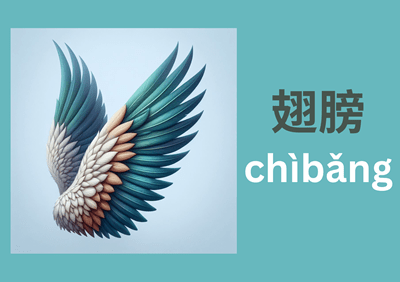
There are many different terms for ‘wings’ in the Chinese language, 翅膀 in particular refers to the wings of insects or birds. It’s a combination of two other characters.
翅 (chi) is the first and is in itself a combination of 支 (the phonetic reference) and 羽 (the character for feathers). The feathers portion of ‘chi’ does to me look like feathers 🪶 (the stalk on the right and the individual feathers on the left) and is pretty easy to remember.
膀 (bǎng) is somewhat stranger and combines 肉 (the character for meat) and 旁 which represents the phonetic sound of the word. Randomness, but apparently this also can mean ‘to flirt’ — I guess if you flutter your wings, it’s kind of like fluttering your eyelashes.

This suggests that 翅膀 (chi bǎng) is the meat on or of the feathers? Kind of a funny one, but I kind of see how they got there.
You can see that Japan just uses the character for wings 羽 but where Chinese pronounces this as yǔ, Japanese says は[ha] + ね[ne]
The Korean 날개 appears in the Middle Korean era as a combination of ᄂᆞᆯ다 which meant ‘to fly’ and 개 which refers to something ‘inanimate’. So it’s a flying tool (not the act of flying itself)? 🤨 ᄂᆞᆯ + 개 eventually became 날개 (nalgae).
Tail

| Traditional Chinese | Simplified Chinese | Japanese | Korean |
|---|---|---|---|
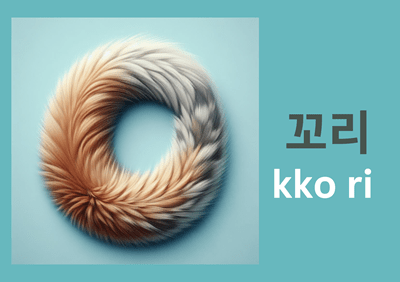
| 尾 wěi | 尾 wěi | 尻尾 shippo しっぽ | 꼬리 kkori |
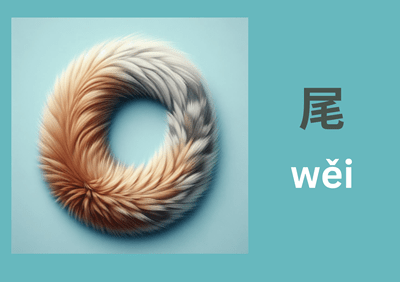
尾 (Wěi) is another compound word with 尸 which refers to a person and 毛 which means ‘hair’, ‘fur’, or ‘feathers.’ Apparently 尸 often refers to a corpse or deceased person (and in fact means cadaver in Japanese). I guess the 尸 is because it looks unconnected to the rest of the body’s biological system perhaps? You know how sometimes you feel like it sort of makes sense, you just can’t explain why?
尻尾 (shippo) is also a combination that uses the 尸 symbol twice, once in each of the two characters. 尾 is clearly the same as the Chinese character (wěi), but Japan has added the character 尻 at the beginning. This is known as (shiri) and means buttocks or bottom 🍑. So it is the hair, fur, feathers on the buttocks, lol.
The Korean word stems from a Middle-Korean word ᄭᅩ리 pronounced skwòlí from circa mid-1400s. I’m not sure where the Middle-Korean word came from though. It seems like they dropped the ‘s’ and ‘w’ to make it more like ‘kòli” until it became 꼬리 (kkori).
Disclaimer
This website is absolutely not a professional resource and is purely my own personal way of trying to learn various languages. If you see a mistake, by all means please let me know in the comments as long as you do so in a friendly way. ❤️
 Where Dragons Roam

Leave a comment